Decoding Daniel Negreanu’s Eighth Bracelet: Advanced Mixed-Game Tactics
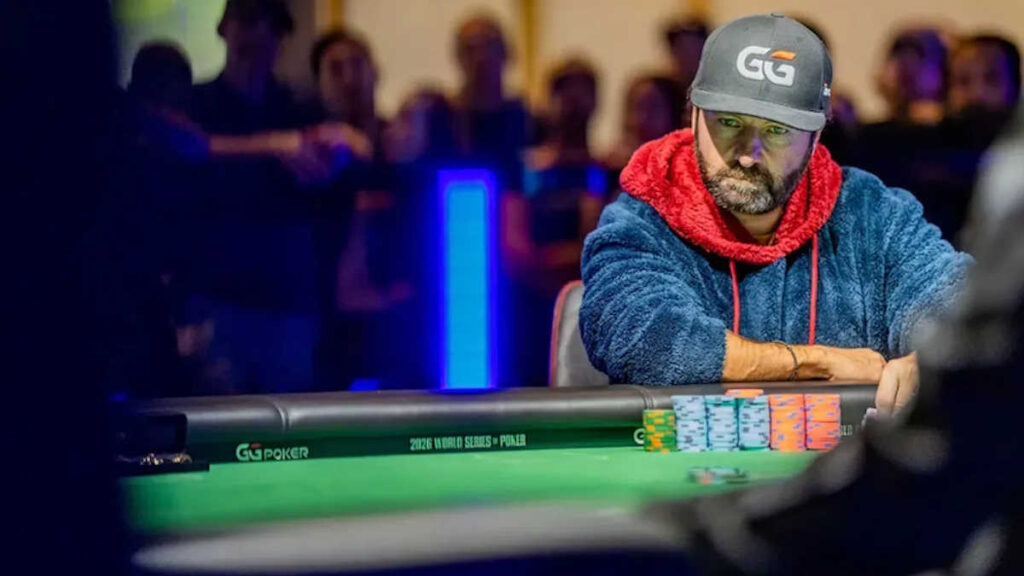
The pursuit of a World Series of Poker bracelet is the defining quest for any tournament professional, but securing an eighth places a player in truly rarefied air. When that player is Daniel Negreanu, a global ambassador for the game whose strategic insights are dissected by millions, the victory becomes a masterclass in itself. His latest triumph, claiming that coveted eighth bracelet in a prestigious mixed-game event, was not merely a testament to endurance but a profound exhibition of advanced, adaptable strategy. For the international poker community watching from Las Vegas to London, Macau to Melbourne, the win served as a powerful reminder that in the complex arena of mixed games, cognitive flexibility and deep theoretical knowledge reign supreme. This article decodes the tactical framework behind Negreanu’s historic win, translating the high-level concepts into actionable insights for players looking to elevate their own mixed-game prowess.
The Crucible of Mixed-Game Mastery
Unlike the homogeneous landscape of a No-Limit Hold’em tournament, a mixed-game event such as the WSOP’s Dealer’s Choice or the venerable H.O.R.S.E. format presents a shifting battlefield. Players must seamlessly transition between fundamentally different disciplines: the draw mechanics of Razz, the high-low split dynamics of Omaha Eight or Better, the fixed-limit betting of Seven Card Stud, and the flop-centric action of Hold’em variants. Negreanu’s victory, achieved against a final table featuring other seasoned mixed-game specialists like John Hennigan and Phil Ivey, underscored a precept he has long championed: specialization in a single game is insufficient. True expertise lies in constructing a cohesive strategic identity that can morph and adapt to the rules of the current hand. This requires not only separate skill sets for each game but also the meta-skill of knowing which aspects of your overall strategy to emphasize as the dealer announces the next variant.
Building a Cohesive Strategic Identity
The first challenge for any mixed-game player is avoiding a “compartmentalized” mindset. One cannot simply think, “Now we are playing Stud Eight,” and completely abandon the strategic lessons from the previous orbit of Limit Hold’em. Successful players like Negreanu develop core principles that transcend individual games. These include precise hand selection relative to position, an acute awareness of pot odds and implied odds across limit structures, and a relentless focus on opponent tendencies. The key is to have these fundamentals so deeply internalized that they become the unconscious foundation, freeing up mental bandwidth to focus on the unique twists of the current game. For instance, the concept of “scooping” a pot in a split-pot game like Omaha Eight or Better is a heightened version of the fundamental principle of maximizing equity, a principle that remains crucial in a game like Razz where you are always chasing a specific low hand.
Exploiting Transitional Moments
A subtle yet critical tactical edge comes in the moments immediately following a game change. Many players require a hand or two to re-calibrate. Advanced players use these transitional moments aggressively. They might open their starting hand range slightly wider in the first hand of a new game, anticipating that opponents are mentally adjusting and may play more passively. Conversely, they become hyper-observant, watching for opponents who make clear errors in the first few rounds of a new variant, thereby revealing a weakness in their mixed-game armor. Negreanu’s table talk and demeanor, often mischaracterized as mere showmanship, are integral to this process; they can be used to gauge an opponent’s comfort level and to sometimes induce a lack of focus during these pivotal shifts.
Game-Specific Adjustments: Beyond the Fundamentals

While a unified strategic core is essential, neglecting the nuanced requirements of each individual game is a path to ruin. Negreanu’s eighth bracelet win showcased a demonstrable command of these nuances. Let’s examine the tactical adjustments required in two of the more complex staples of mixed-game rotations.
Navigating the Depths of Razz
Razz, a lowball Stud variant where the lowest five-card hand wins, inverts typical poker hierarchies. Here, Negreanu’s skill in reading opponents’ upcards and deducing their likely downcards becomes paramount. An actionable tip for players is to rigorously track “dead cards”—those that have been folded or are visible in other players’ upcards. This dramatically improves the accuracy of your odds calculations for catching a good low card. Furthermore, in Razz, aggression is often based on the perceived strength of your starting three-card hand relative to your opponents’ door cards. A advanced tactic is to occasionally play a slightly weaker starting hand aggressively if your door card is very low and your opponents’ door cards are high, using your positional image from previous games to represent overwhelming strength and steal antes and bring-ins.
Omaha Eight or Better: The Art of the Scoop
In this high-low split pot game, merely winning half the pot is often a marginal result. The true profit lies in “scooping” the entire pot. Negreanu’s strategy here emphasizes starting hands with “scoop potential”—hands that have strong possibilities to win both the high and the low, such as A-A-2-3 double-suited. An actionable strategy is to devalue hands that are likely to only contest half the pot, even if they are strong for that half, such as a hand with four high cards. Post-flop, the calculation changes dynamically. A critical skill is recognizing when the board texture has killed your scoop potential (e.g., three low cards appear, making a low inevitable, but your high hand draw is weak) and adjusting your aggression accordingly, often shifting towards a more cautious, pot-control mode focused on securing your half.
The Mental Metagame: Endurance and Focus
Winning a long-form mixed-event at the WSOP is as much a test of mental stamina as technical skill. The cognitive load of constantly switching gears is immense. Negreanu’s performance highlighted the importance of a disciplined mental routine. This includes managing energy levels between hands, avoiding the temptation to dwell on a bad beat in a game that may not reappear for another thirty minutes, and maintaining emotional equilibrium. A practical tip for tournament players is to use the dealer’s announcement of the next game as a mental trigger to consciously reset. Take a deep breath, clearly recall the starting hand guidelines for that specific game, and scan the table for any immediate observational opportunities. This deliberate, ritualistic approach prevents autopilot and keeps your strategic engine running optimally through the marathon.
From Observation to Implementation
For the aspiring mixed-game player, the path forward involves structured study and deliberate practice. Simply playing online mixed games on platforms like PokerStars or GGPoker is a start, but true improvement requires review. Record your sessions, and pay special attention to your decision-making in the first three hands after a game switch. Are you making fundamental errors in hand selection? Furthermore, study the commonalities between games. Create a personal “cheat sheet” of your core, universal principles on one side, and on the other, list the two or three most critical, game-specific adjustments for each variant in your target mix. This physical act of synthesis helps bridge the gap between isolated knowledge and integrated skill. Finally, engage with the content produced by masters like Negreanu himself on his training site, but always through the lens of “Why?”—understanding the underlying principle is more valuable than memorizing a specific play.
Daniel Negreanu’s eighth WSOP bracelet stands as a monument to a lifetime of strategic evolution. It proves that in the sophisticated ecosystem of mixed games, the most formidable weapon is a mind trained to be both a specialist and a generalist, capable of deep focus on the micro-details of Razz while never losing sight of the macro-strategy of the entire tournament. By embracing a unified strategic core, mastering game-specific nuances, and cultivating unshakeable mental stamina, players can begin to decode the complex puzzle that Negreanu has so masterfully solved. As the poker world continues to celebrate this landmark achievement, it serves as the ultimate inspiration to delve deeper into the rich, challenging, and profoundly rewarding universe of mixed games. Remember, poker is a game of skill meant to be entertaining. Always play within your limits, set deposit and time loss limits, and view any form of poker as entertainment, not a source of income. If you or someone you know has a gambling problem, seeking help from organizations like GamCare or Gambling Therapy is a sign of strength.
